
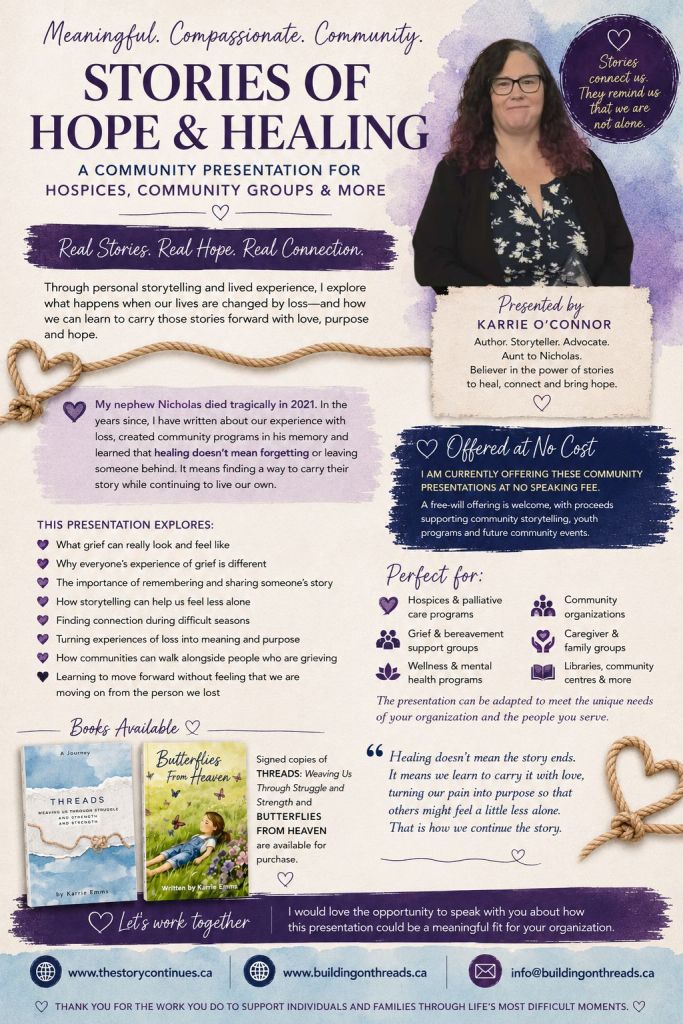
A meaningful event is more than a date on the calendar. It is a room full of people carrying different experiences, questions, hopes and responsibilities : all gathered for a moment of shared attention.
The right speaker can help that room breathe differently.
Maybe your audience needs renewed energy. Maybe they are navigating change, grief, burnout or uncertainty. Maybe you want to help people see their own resilience more clearly. Whatever your purpose, finding the right speaker is not simply a matter of choosing the most recognizable name.
It is about finding the right thread.
If you are searching for inspirational speakers in Canada, keynote speakers in Canada or a speakers bureau in Canada, these ten considerations can help you make a thoughtful, confident choice : especially if your event is taking place in Northern Ontario or another community where authentic, relevant storytelling matters.
1. Begin with the outcome you want to create
Before looking at speaker profiles, ask yourself:
What should your audience think, feel or do differently after this presentation?
Your answer might be:
- Feel less alone during a difficult season
- Reconnect with purpose
- Build resilience during organizational change
- Understand grief and healing in a more compassionate way
- Find the courage to begin again
- Strengthen leadership, teamwork or community connection
A keynote speaker should support the larger purpose of your event. If your goal is to help healthcare workers feel seen after a demanding year, a high-energy business speech may not be the right fit. If you are opening a corporate conference focused on innovation, a deeply reflective session may need to be balanced with practical takeaways.
Start with the destination. Then look for the voice that can help your audience move toward it.
2. Lived experience can be more powerful than polish
Professional delivery matters. Your speaker should be prepared, reliable and comfortable in front of a room.
But polish alone does not create connection.
Many of the most memorable inspirational speakers in Canada bring lived experience to the stage. They have navigated loss, addiction, illness, leadership challenges, caregiving, trauma, reinvention or other difficult chapters : and they have taken time to understand what those experiences can teach.
That does not mean every speaker needs to share a dramatic personal story. It means their message should have roots.
Ask:
- Has this speaker lived, studied or worked within the subject they are presenting?
- Can they speak about difficulty without simplifying it?
- Do they offer insight rather than simply recounting events?
- Can they respect the boundaries and experiences of your audience?
A story becomes useful when it gives people something to carry forward.
3. Look for a story with structure, not just a compelling biography
A powerful life story does not automatically become a powerful keynote.
The speaker must know how to shape experience into a clear and purposeful message. The presentation should have a beginning that draws people in, a middle that creates understanding and a closing that offers direction.
When reviewing a speaker, listen for:
- A clear central idea
- Specific stories rather than general statements
- A thoughtful emotional arc
- Practical reflection or action
- A conclusion that connects back to your event goals
You are not booking a biography reading. You are booking a guided experience.
The best speakers know when to invite emotion, when to pause, when to add humour or lightness, and when to give the audience a practical next step.
4. Match the speaker to your people and your place
A speaker who connects beautifully with one audience may not be the right fit for another. Context matters.
Consider your audience’s age, profession, culture, language, community and current concerns. Think about whether your event is taking place in a school, workplace, hospital, conference centre, community hall or online.
For organizations looking for keynote speakers in Ontario, regional understanding can also make a meaningful difference. A speaker familiar with smaller communities, northern distances, limited resources or the realities of rural and remote life may connect in a way that feels immediate and genuine.
Canadian audiences are not all the same. Neither are Northern Ontario communities.
Look for representation and perspective that reflect the room : while also making space for voices that can broaden understanding. The strongest match is not always the person who looks most like your audience. It is the person who can meet them with respect and help them see something new.
5. Consider whether themes of resilience, grief or healing fit the moment
Inspirational speaking is often associated with motivation, but inspiration does not always look like excitement.
Sometimes it looks like relief.
A speaker who addresses grief, healing, resilience, personal growth or recovery may be exactly what your audience needs. These themes can resonate with healthcare organizations, schools, non-profits, workplaces, support agencies and community groups because difficult experiences are often present in the room : even when they are not spoken aloud.
Still, sensitive subjects require care.
Ask whether the speaker:
- Uses trauma-informed language
- Understands that healing is not linear
- Avoids promising simple solutions
- Gives people room to respond in their own way
- Can offer hope without dismissing pain
A good presentation does not force an emotional reaction. It creates a safe opening for reflection, recognition and possibility.
6. Decide whether you need a keynote, workshop or conversation
“Speaker” can mean many things.
You may be looking for:
- A 30- to 60-minute keynote
- An interactive workshop
- A panel participant
- A moderated conversation
- A school presentation
- A leadership retreat session
- A keynote followed by questions or small-group discussion
Think about your event’s energy and schedule. A main-stage keynote may establish a shared theme, while a workshop can help participants practise new skills. A smaller conversation may be more appropriate when the subject is personal or emotionally complex.
Sometimes the best format is a combination: a story to open the door, followed by practical work that helps people walk through it.
7. Review more than a speaker’s headshot
A polished profile photo can introduce a speaker, but it cannot tell you how they will hold a room.
Whenever possible, review:
- Video clips
- Podcast interviews
- Testimonials
- Previous event descriptions
- Published writing
- Sample topics
- References or conversations with past organizers
Pay attention to how the speaker communicates, not just what they have accomplished. Do they speak with warmth? Are they easy to follow? Do they listen? Can they make a large room feel personal?
At Building on Threads, our speaker profiles are designed to help organizations understand the people and perspectives behind the presentations. You can also explore individual voices such as Merissa Mills and Mark Wilson.
8. Understand the value of working with a speakers bureau
You can book a speaker directly, and sometimes that is the right approach. Direct booking may work well when you already know the person, have an established relationship or are arranging a small local event.
A speakers bureau can be helpful when you are still searching for the right fit.
A bureau may help you:
- Clarify your event brief
- Shortlist speakers by topic and audience
- Connect lived experience with organizational goals
- Confirm availability
- Coordinate introductions
- Support communication around expectations and logistics
A bureau is not meant to replace your judgment. It should make the path clearer.
At Building on Threads Speakers Bureau, we take a personal approach to matching organizations with speakers whose journeys and expertise align with the event. Our focus is Northern Ontario, but the stories we work with speak to universal experiences : growth, grief, courage, creativity and connection.
9. Clarify logistics early
A meaningful speaker still needs a workable plan.
Before confirming a booking, discuss:
- Date, time and location
- In-person, virtual or hybrid format
- Presentation length
- Audience size and age range
- Microphone, screen and technical needs
- Travel, accommodation and meals
- Accessibility requirements
- Recording or photography permissions
- Whether the speaker will participate in a Q&A
- Any topics or language that should be approached carefully
If your event is in Northern Ontario, travel time and weather can be especially important. Build in reasonable flexibility, particularly during winter months or when bringing a speaker to a smaller or remote community.
A clear brief protects everyone. It gives the speaker the information needed to prepare, and it helps your team create a welcoming experience.
10. Build a realistic budget : and measure value thoughtfully
Speaker fees can vary widely. The cost may depend on experience, demand, travel, customization, event length and whether you are booking a keynote, workshop or multiple appearances.
When creating your budget, ask what is included:
- Speaker fee
- Travel and accommodation
- Preparation or customization
- Workshop materials
- Additional sessions
- Recording or usage rights
- Taxes and administrative costs
The most expensive speaker is not automatically the most effective. The least expensive option is not always the best value.
Think about the impact you are hoping to create. Will the speaker help people feel connected? Will the message support your organization’s priorities? Will attendees continue the conversation after the event?
Sometimes the most valuable presentation is not the one that receives the loudest applause. It is the one people talk about in the hallway, bring home to their families and remember months later.
A simple brief to prepare before you reach out
When contacting a speaker or bureau, you do not need to have every detail figured out. Start with:
- Your event date and location
- The audience and approximate size
- The main outcome you want to create
- Two or three themes you are considering
- Your budget range, if known
- Any accessibility, cultural or logistical considerations
That is enough to begin the conversation.
You do not have to find the perfect words before asking for help. Sometimes the first conversation is where the shape of the event begins to emerge.
The right story can change the shape of a room
When you are looking for inspirational speakers in Canada, you are not simply filling a program slot. You are choosing a voice to help hold a shared moment.
The right speaker can honour what people have lived through, name what they may be carrying and offer a new way to look ahead. They can turn a room of separate individuals into a temporary community : connected by recognition, reflection and possibility.
At Building on Threads, we believe every person has a story, every community has a voice and every story has the power to create connection.
If you are planning an event and would like to explore a thoughtful speaker match, we would love to hear from you. Visit our Book a Speaker page or contact us directly with a few details about your event.
We will help you find the next thread.
 Building On Threads
Leave a comment